Tuesday, October 16, 2012

A block Tuesday

B block English 11 is in an assembly today.
To be fair, and keep you all at an equal pace, we'll make today a work day! :)

Things TO DO:
- catch up on your journal
- answer the chapter questions
- start defining the vocabulary list (put a check mark beside the words you already know)

OR - Participate in the Globe and Mail Student question: Have you learned anything in school that helped prevent bullying? (You can use the ipods - they are working now!)

Monday, October 15, 2012

Irony, Vocabulary, and more...

1) Irony:
A literary device where the opposite of what you expect occurs.


That is, it is ironical when there is a difference between what is spoken and what is meant (verbal irony), 
what is thought about a situation and what is actually the case (situational irony), 
or what is intended by actions and what is their actual outcome (dramatic irony). 

This guy is young and way funnier than me. Let him explain the three types of irony to you.


2) Review Chapter 6 - Winter, a symbol? Kite running introduced. Lying and eating dirt. "Maybe you'll win." Television, a symbol?


Kite Running Short Doc:

3) Chapter 7  - see psychological dissociation at work...

4) Time to work - add in vocabulary...

Friday, October 12, 2012

Why all this sad stuff?

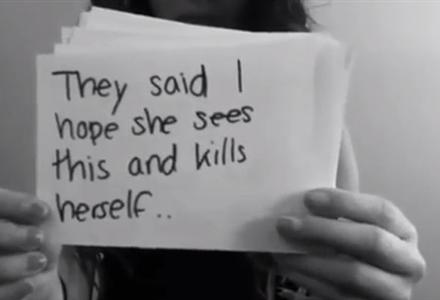
1) Discussion: New story about bullied girl, my own sad news...
From the Amanda Todd video.

Why should we reflect on sad stories 
(in the news, in literature)?

2) Time to Read - Ch. 5.

3) New journal topic - same as discussion topic.

4) Time to work on journal, notes, questions...

5) Homework: read to the end of Ch. 6


Tuesday, October 9, 2012

Symbols, Motifs, Buzkashi

Buzkashi Video, as promised... what does this video teach us about Afghani culture?

1) sym·bol/ˈsimbəl/

Noun:
  1. A thing that represents or stands for something else, esp. a material object representing something abstract. A symbol's meaning can shift to represent more than one thing, especially in a longer piece of literature.

Examples from the Kite Runner (so far). What do these represent?
  • Hassan's Hairlip
  • The Pomegranate Tree
  • "Feeding from the same breast"
  • Kites
2) mo·tif/mōˈtēf/

Noun:
  1. A recurrent and distinctive feature or dominant idea in an artistic or literary composition. 

Examples from The Kite Runner:
  • Tragedy and Loss
  • Father and Son Relationships
  • Wounds/Scars/Disabilities
  • The Connection between the Social and Political
  • Discrimination (Pashtuns vs, Hazaras)
  • What is Masculine?

3) Other terms - foreshadowing, metaphor

4) Next Journal Topics (pick one or two):

  • Characterize Baba and Amir's relationship. Why does "hate" enter into their father/son relationship? What quotations show us, the readers, the raw truths about their feelings towards one another?
  • Children are not colouring books.
  • Much of this novel is about discrimination and cultural divides across political/social/religious lines. Is it human nature to hate the "other"? Do we in Canada have our own stories of ugly discrimination? Or, what about right here in the hallways of Highland, what ugly divides and discriminations happen here? How can we deal with this sort of hatred?
  • Do you identify with Amir in any way? Most students see at least a glimmer of themselves in the complicated relationship he has with his father. In what ways are you like Amir?
5) What is reflective writing? 

Reflection is a form of personal response to 
experiences, situations, events or new information. 
It is a ‘processing’ phase where thinking and learning 
take place. There is neither a right nor a wrong way 
of reflective thinking, there are just questions to 
explore. 

Reflective writing is:
• your response to experiences, opinions, events or new information
• your response to thoughts and feelings
• a way of thinking to explore your learning
• an opportunity to gain self-knowledge
• a way to achieve clarity and better understanding of what you are learning and thinking about in class
• a chance to develop and reinforce writing skills
• a way of making meaning out of what you read and discuss in class

Reflective writing is not:
• just conveying information, instruction or argument
• pure description, though there may be descriptive elements
• straightforward decision or judgement (e.g. about whether something is right or wrong, good or bad)
• a summary of course notes
• a standard formal essay

6) Time to work on journals or questions...

Post-Turkey Tuesday

1) Ch 4 Quiz

Kabul, Afghanistan - in the 60's and 70's before the wars.


2) Review Ch. 3 and 4

3) Read Ch 5

4) Questions and vocabulary work....

5) Tests back.

6) Tomorrow: Symbols, Motifs...

Thursday, October 4, 2012

Into The Kite Runner

1) Take out The Kite Runner - B block, please silent read to end of Ch.2
2) Discussion: Think back - who was your best friend when you were about 7 or 8? Did you ever do something "bad" with them? Do you remember how you felt? 


Are there absolute rights and wrongs?


Terms/ideas to Consider - are we all designed to avoid pain?

Hedonism - pursuit of or devotion to the pursuit of pleasure.

Altruism - Unselfish concern for the welfare of others. An altruist is not concerned with pursuing pleasure.

What is a False Dichotomy?

3) Review first two chapters - characters chart

4) Read: Ch. 3


5) Journal Topics: 

  • How did you learn what was right from what was wrong? Can you remember and describe a specific event?
  • What is it like living in a world that preaches good, but exemplifies wrong? Let`s look at what`s in the headlines right now. Tainted meat, unfair death of civilians in Syria, Harper celebrated for being the most deceptive prime minister yet, and so much more in the world of celebrity worship... and all the ordinary stuff of your world that is so not cool. How does this relate to our novel?
HOMEWORK: Read to the end of Chapter 4 - note takers for chapters 2, 3, 4

Wednesday, October 3, 2012

Wednesday!

1) Who needs to finish the test?

2) Wanna finish the movie? Vote.

3) The E word.

4) Afghanistan World Cafe